Nutrient-Rich Soil vs. Nutrient-Depleted Soil
posted on
November 6, 2023

"How does soil health impact the quality of my food?"
Well, this is a question we’ve been answering for over a decade of raising grass-fed beef here in the pastures of Northeast Indiana.
Today, I’ll attempt to answer that question by running a "science experiment" of sorts that I’ve captured on video below. In the experiment, I compare our farm's soil with soil located just 50 feet from our property!
Before we “dig in” to the soil experiment video, let’s take a quick look at what it means for soils to be healthy, what soil depletion is, and how that impacts food quality.
Let’s get started…
Originally published on August 23rd, 2019, this article was updated and republished on November 6th, 2023.
Characteristics of Healthy Soil
There are variations in what healthy soil looks like, depending on regional soil types and other factors. But there are some consistent characteristics that anyone can use to identify healthy soil – anywhere in the world.
Nutrient-rich soils all have a few measurable characteristics in common:
- Good soil aggregate
- Sufficient root depth
- Balanced nutrient levels
- Good water infiltration rates
- High resilience in the face of unfavorable conditions.
And, the biological diversity above and below the soil is another factor, and one, that typically follows from the other characteristics. Let’s spend a little more time on each of these points above for deeper understanding.
Healthy soil aggregate (what you’ll see with our farm’s soil in the video) is the opposite of hard, compact soil. While soil with good aggregate composition will indeed till easier, the practice of tilling actually leads to more soil compaction, erosion, and the depletion of aggregates.
Soil depth refers to the distance between the surface of the soil and any barriers that stop the downward growth of roots.
Soil water infiltration rates are the rates at which water moves through the soil, and how that movement occurs.
Biological diversity is also an essential characteristic of healthy soil. The amount of diversity of plants, insects, and soil microorganisms – leads to soil that can stand up against flooding, droughts, windstorms, and other natural problems.
To grow their best, plants need a specific balance of nutrients from the soil, which they take up in their roots. The key players are nitrogen, phosphorous, potassium, magnesium, and calcium. Too much of one is just as harmful as not enough – in the same way that taking too much vitamin E can make us humans just as sick as not getting enough vitamin E.
Plants also need the help of beneficial organisms like insects, bacteria, worms, and fungi. Nutrient-rich soils play host to a massive ecosystem of different organisms. Just check out the life in our soils, specifically the humble earthworm:

This ecosystem helps break down dead plants and organic material, and releases nutrients into the soil, making them available. Certain players in this system also keep pests in check, keeping populations low and allowing the rest of the system to thrive.
The result for humans is nutrient-rich foods, from meat, fruits, and vegetables raised on healthy soil. Most food processed in the US is from depleted soil due to routine practices used in industrial agriculture – over tillage, over-grazing, and mono-cropping. But there’s a growing movement toward regenerative farming, which restores soil health and nutrient content in your food.
Sound good? If so, you can visit the Seven Sons Farm Store in Roanoke, IN, or browse our online store to get your hands on the high-quality food from our regenerative practices.
Can You Restore Nutrient-Depleted Soil?
The good news is that it’s possible to restore nutrient-depleted soil, and farms like ours are leading the way! The less exciting news is that it takes work and planning, and most players in the food chain aren’t willing to invest the time.
Soil regeneration is the process of building up soils that have been depleted, generally through intensive agricultural efforts. We began our long-running soil regeneration process on the Seven Sons Farm 20+ years ago, and we continue to see new and improved results every season.
Regenerating the soil requires astute observation and implementing practices that allow the land to heal itself year after year. What does that mean to us? What are we doing??
Our friend Gabe Brown identifies these 5 primary factors for restoring nutrient-depleted soil:
- Minimize soil disturbance: Tilling, whether from hoes, rakes, shovels, or large-scale equipment, causes carbon to be released into the atmosphere. At Seven Sons, after several years of leaving our soil undisturbed, organic matter has tripled from 2% to 6%. Keep in mind that each 1% increase in organic matter means an acre of land retains an additional 20,000 gallons of water.
- Protect the soil: Keeping the soil covered for as many days of the year will provide a protective armor of sorts. It helps protect against wind and water erosion and increases organic matter in the soil by allowing macro- and micro-organisms to thrive.
- Diversify your plants: Plant diversity helps ensure there will always be something green and growing on the land more days out of the year. Plant diversity also protects forages from the negative impacts of insects, thus reducing the need for pesticides.
- Utilize Cover crops for more living roots more months of the year: Planted during the off-season, cover crops help protect and maintain soil health. Common cover crops are wheat, barley, and clover. You can even harvest some of your cover crops at the end of the season. The number one tool for regenerating your land is having green growing roots in the ground year-round. That is the process of regeneration – there’s no regeneration if there aren’t any roots growing!
- Embrace the positive impact of farm animals: Chickens, cows, and pigs play a significant role in soil regeneration. Their movements and interactions with the land provide beneficial disturbance and fertilization as the animals migrate and graze forages and cover crops.

Over time, the soil ecosystem can sustain itself – as long as you don’t do anything to throw the balance off again.
The specific process for soil regeneration depends on several factors, including whether or not you include livestock in the process. At Seven Sons, we’ve found that pasture-raised and grass-fed livestock like cattle, sheep, bison, chickens, and pigs increase the nutrient cycling of the soil ecosystem.
Letting animals interact with pastures naturally helps keep pests in check, provides a delicate amount of beneficial disturbance, and encourages the growth of a diverse range of plants.
Ok, that’s enough of reading the science behind what we do. Watch as my brother Blake runs his experiment showing how each type of soil handles 1 inch of “rain”:
The result of this experiment absolutely matters for you, your food, and OUR environment.
What Is Nutrient-Rich Soil?
Nutrient-rich soil has some key characteristics, but the big picture is that all the ingredients and conditions are present to allow the plants growing in them to thrive.
As you can see in the experiment from the video, healthy soils retain water effectively. Due to the loose, fluffy texture of the soil aggregate, water travels downward through the layers of the soil more than it does over the surface. This provides better access to the roots of the plants and keeps the entire soil ecosystem hydrated and healthy.
Soils rich in nutrients hold onto water and funnel it downwards, deeper into the earth, instead of letting it run off into streams, lakes, and rivers. Healthy soil channels carbon deeper into the soil ecosystem, making nutrients available to the various organisms.
Regenerative grazing practices increase the speed of soil regeneration, stimulating the growth of deeper roots and the cycling of nutrients throughout the soil ecology. Properly conducted, regenerative grazing introduces organic material into the soil matrix and encourages plant and animal diversity.
What Is Nutrient-Depleted Soil?
As the video also makes clear, nutrient-depleted soil is typically dense, crumbly, and dry. It lacks soil aggregate to hold onto water, which leads to runoff and discourages diversity in the organisms that live in and on the soil.
The results of soil depletion go far beyond the issue of agricultural runoff into rivers, lakes, and streams. The most depleted soils won’t support life, and that’s when plants require synthetic fertilizers to give plants the needed boost for the season, but this results in low nutrient-dense foods and furthers the degradation of soil life.

The result of widespread nutrient depletion in soils is staggering. Studies indicate that the nutritional quality of the fruits and vegetables we buy has steadily decreased over the past several decades.
Synthetic fertilizers and pesticides, along with genetic engineering, mean that yields continue to go up. However, poor soils mean that each fruit or vegetable you buy at the supermarket has less and less nutritional value, with some studies showing decreases of up to 50% of the content of some nutrients.
What Causes Soil to Deplete?
To grow, plants need to use the nutrients in the soil. This can lead to depletion if the soil is overused and the biological organisms within the soil are not healthy.
A regenerative process occurs as the biological organisms – microorganisms – replenish nutrients in the soil. Harmful practices like tillage and using synthetic chemical fertilizers deplete the microorganisms in the soil, so it won’t have any way to regenerate the nutrients naturally. You lose the biological process!
And that requires using more harmful synthetic chemicals that continue to degrade and deplete soil nutrients.
It’s a biological process.
Biological diversity is the key to soil health and avoiding nutrient depletion. There’s an unlimited amount of nutrients in the soil, but most aren’t available to the plants.
It’s the microorganisms in the soil that break down those nutrients and feed the plant roots. Take the earthworm, for example. It helps replenish soil nutrients.
Just 10 earthworms within a cubic foot can produce 160,000 pounds of castings per acre each year. Why is that important? Because earthworm castings are 5 to 10 times higher in nitrogen, phosphorus, and potassium than most soil aggregates.
But dry, sterile, nutrient-depleted soil is unlikely to have one earthworm, let alone 10. The loss of nutrients is significant.

There is hope, though. Earthworm eggs (like those pictured above) can lay dormant in the soil for decades – only hatching when the conditions are right. This means we can revive our soil and replenish it, if we take the right steps.
What Nutrients Are Depleted in Soil?
The most obvious nutrients – phosphorus, nitrogen, potassium, magnesium, and calcium – are not necessarily the most important. They’re the ones that will show up on soil tests and be identifiable early on. Depletion of these nutrients is also an indicator of whether or not you lack soil life – showing a need to build soil life so that it can replace and rebuild these nutrients in the soil.
For example, phosphorous is vital to plant metabolism, helping plants convert energy into growth. Plants need nitrogen to make chlorophyll, and inadequate nitrogen means that the plant can’t produce the sugars it needs to live.
Micronutrients like copper and zinc are also indicators of nutrient depletion. These are not as obvious because the symptoms of low micronutrients would be plant disease and pests, and those symptoms can be temporarily remedied with insecticides and other chemicals that mask those problems. As a result, these micronutrients never get replaced, and any food grown ends up devoid of them.
Intensive agriculture strips these nutrients and more from the soil, resulting in weaker plants steadily losing their nutritional value.
Our Commitment to Improving Soil Quality
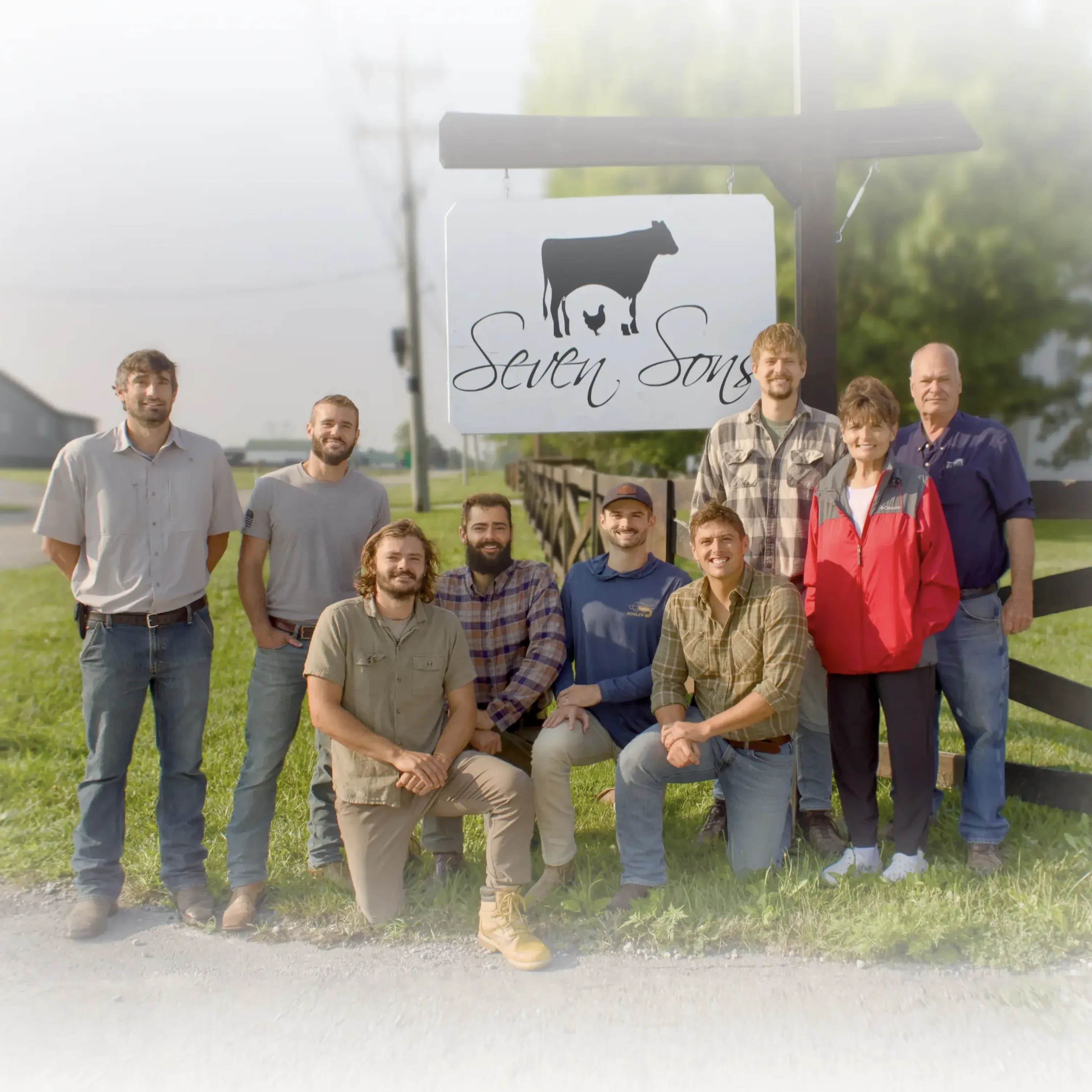
At Seven Sons Farms, we've devoted over 25 years to creating the healthy soil and grasses that our animals graze and feed on throughout the year.

It's a privilege that a small percentage of livestock ever enjoy, but we're grateful we can bring this opportunity to them and our customers. You can tour the Seven Sons farm online or in person to see the results like Blake is showing in the picture above.
It truly is our vocation.
I'd love to hear what you learned from this short video and reading this article. Please join the conversation by leaving a comment below.