Labels Lie, But SOIL Speaks the Truth
posted on
November 23, 2026
Good morning from Roanoke:
This is me helping my brothers with a live soil demonstration at one of our Farm-to-Fork dinners this summer.
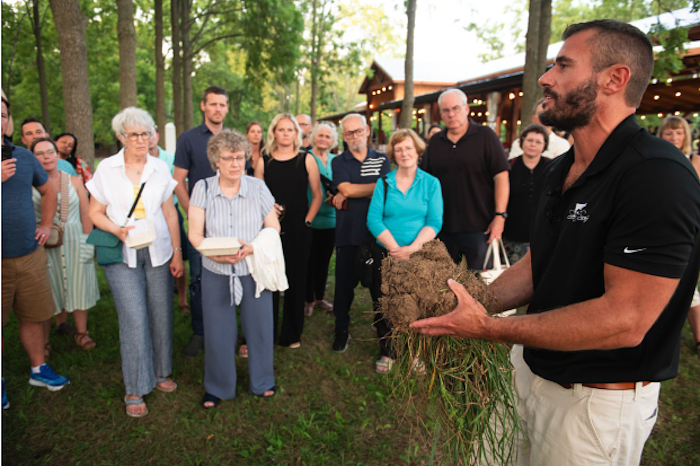
I truly believe this demonstration has the power to change the hearts and minds of every farmer, consumer, executive, and legislator in the U.S.
Why? Because it’s undeniable proof that regenerative farming heals the soil. And when we heal the soil, we can restore prosperity to American farmers and grow nutrient-dense food that heals a sick society.
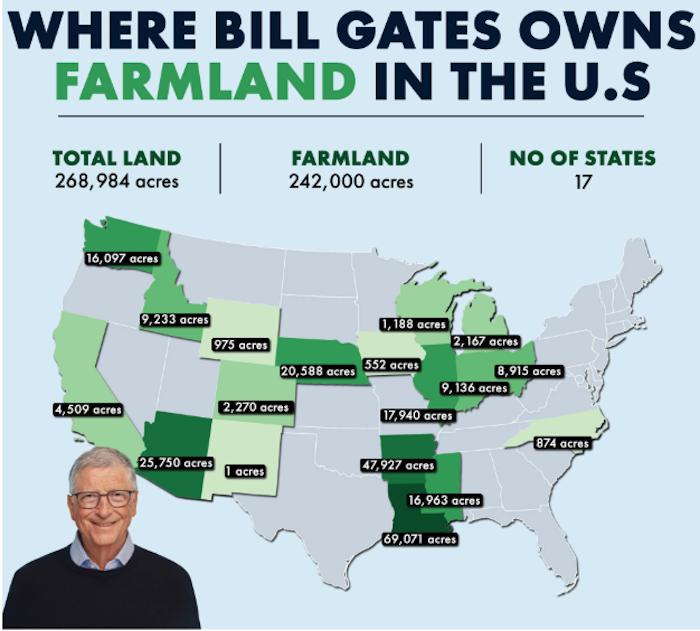
And as I explained in last week’s newsletter, this matters more now than ever. Because farms aren’t passing to the next generation, corporate and foreign investors are buying up farmland faster than ever before. It’s what I’ve been calling the Silent Sellout of American Soils.
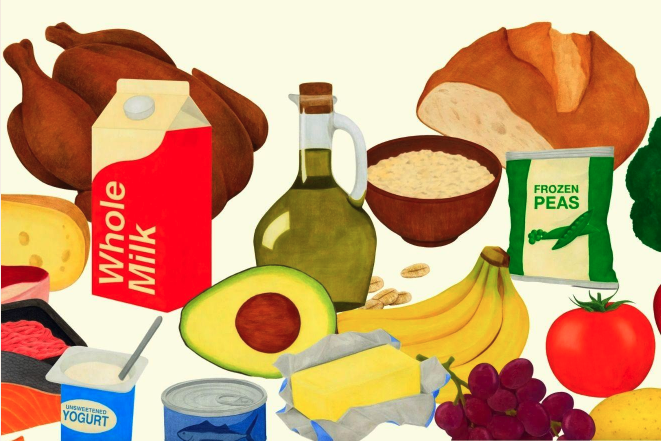
Consumers are told they can help by voting with their food dollars. Support U.S. farmers. Support better practices. But this is going massively wrong. Shoppers walk into grocery stores, get bombarded with labels that cost a premium, and end up duped by promises that are never kept.
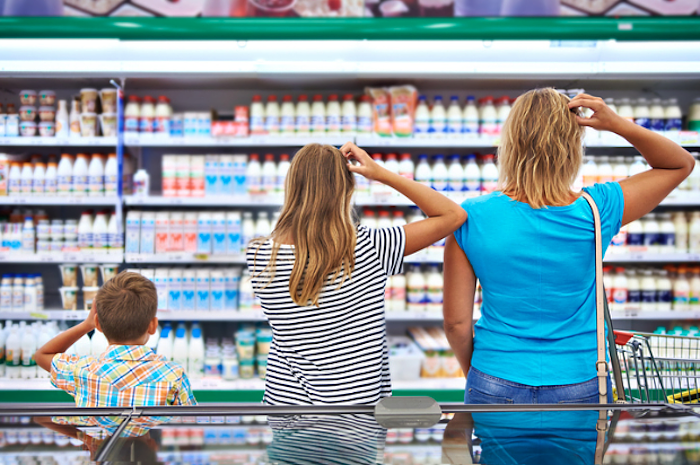
(I’ve used the picture above for years because I think it perfectly represents the very real dilemma tens of millions of shoppers face every day when they walk into an American grocery store.)
According to Farm Action, the Big Four meatpackers in the U.S. market operate under more than 70 separate brands, all with differing claims. It’s an illusion of choice.
The reality is, there’s too much distance between the farm and the grocery store for real care and integrity to survive the trip.
To drive my point home, today I’m exposing three examples of misleading labels that might make your blood boil.
Let's dive in...
The Great Grass-Fed Labeling Lie
In 2009, I found myself standing on a ranch in Yankton, South Dakota, with a group of grass-fed producers.
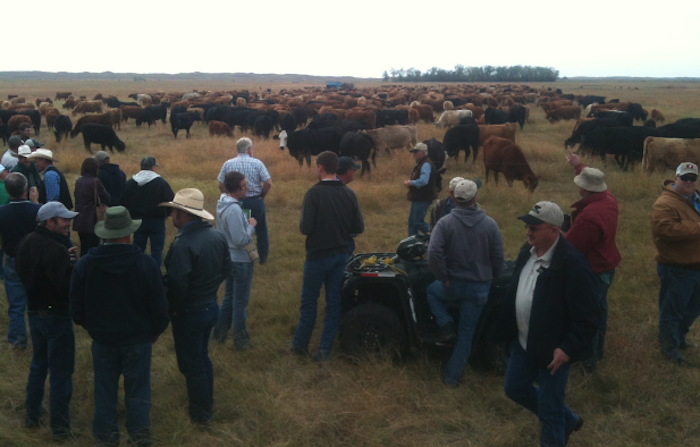
(My brother Blake and I were visiting with fellow producers at one of the first national grass-fed producer gatherings.)
This large ranch produced for not one, but multiple prominent nationwide grass-fed beef brands. To my surprise, the rancher was feeding his grass-fed cattle grain byproducts like distiller's grains and soy hulls.
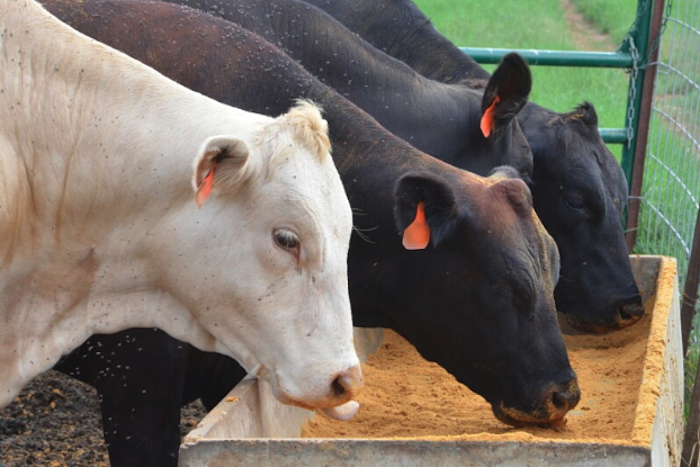
(Above: cattle eating distiller's grains. Does this look 100% grass-fed to you?)
Yet I knew without a shadow of a doubt those brands were selling this very product with a USDA-approved label claiming 100% grass-fed.
When I questioned him, he explained he was feeding his cattle to the exact standards those companies allowed and encouraged. As I dug deeper, it turned out that, at the time, the USDA’s definition of 100% grass-fed simply meant “no starch.” So cattle could be put in a feedlot-type scenario and fed GMO soybean hulls, distiller's grains, beet pulp, and a host of other byproducts, then sold at a premium with a USDA-approved 100% grass-fed label slapped on the package.
I raised this issue on stage in front of a national audience of grass-fed producers. A journalist in the room published my concerns in a national agriculture publication, and thankfully, the regulations were eventually changed.
But folks, this went on for years before it was ever caught.
The Organic Revolution That Never Was
According to the Organic Trade Association, organic food has grown from a $14 billion niche market in 2005 to a $70 billion mainstream industry. On the surface, it looks like a success. But it’s far from the truth.
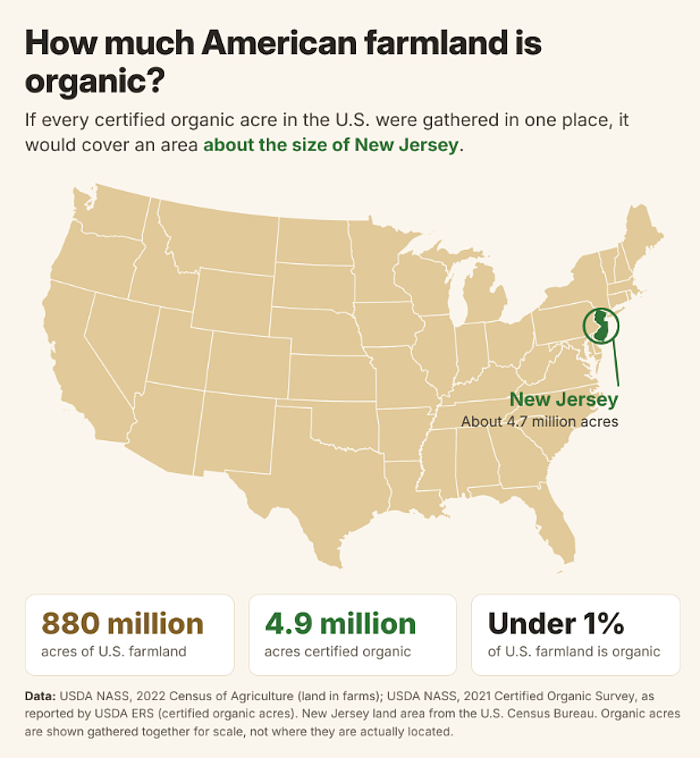
Nearly 80 years after the organic movement began, it accounts for less than 1% of U.S. farmland.
80 years, less than 1% of farmland.
This is an utter failure.
After the USDA took over organic labeling, it quickly became influenced by industrial agriculture, and we now have what I would call industrial organic. Most organic livestock operations mirror conventional CAFO systems, with tweaks like swapping conventional feed for certified organic feed.
But here’s the dirty little secret. To keep the price of USDA organic meat, dairy, and eggs down, many U.S. food companies and brands feed their livestock organic grain imported from foreign countries.
In recent years, the U.S. has imported roughly half of its organic soybeans, and at the peak, nearly 80%. So much of this booming industry is going into the pockets of large corporations and foreign entities. Not to mention, this widens the traceability gap even further.
And one of my biggest pet peeves is that certified organic crop production often relies on heavy tillage, far more than most conventional farmers do.
I believe tillage is the number one cause of soil degradation in the U.S., far greater than even chemical applications. That's a dilemma nobody talks about, and it's a subject for another newsletter. The fact that organic standards aren’t measured by soil improvement is the ultimate failure.
Almost every day, well-meaning people ask us on social media and by email if we’re certified organic. The answer is no, and we never plan to be.
Let me be clear. I still buy some organic products, but we have to recognize that organic is a small step in a better direction, yet still a far cry from what’s needed.
The "Made in America" Labeling Loophole
$2 million…
That’s how much Seven Sons would save every year if we simply imported all of our grass-fed beef from foreign countries. Yet year after year, we say NO.
But this is what some of our largest competitors do. And here’s the crazy part. For most of the last decade, companies could do this legally and still put “Product of USA” on the label.
In December 2015, Congress exempted beef and pork from the Country of Origin Labeling law, known as COOL. As a result, according to the Stone Barns Center, 75% to 80% of grass-fed beef sold in the U.S. is imported.
The USDA finally tightened the “Product of USA” label this January, but the imports haven’t stopped, and neither has the marketing.
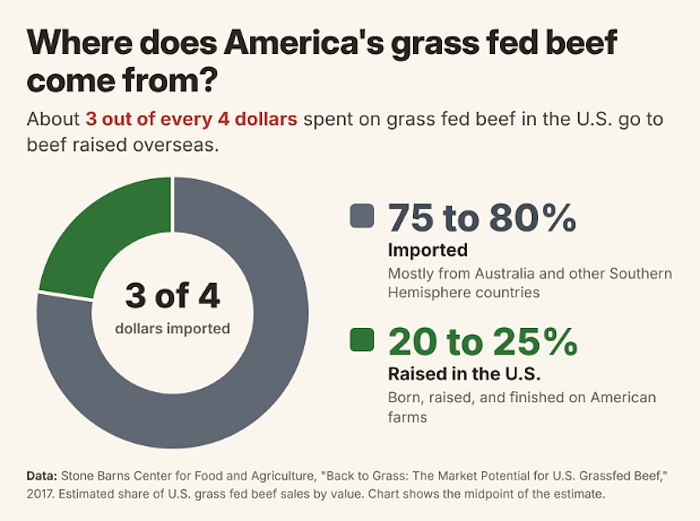
To this day, the largest online meat box company still sells hundreds of millions of dollars of cheaply imported grass-fed beef at high premiums.
Yet their homepage once boldly proclaimed they were: “The country’s most trusted source for 100% grass-fed beef online.”
Most trusted??! Not COOL.
LABELS LIE, BUT SOIL SPEAKS THE TRUTH
I can’t tell you how many customers have come to our farm exhausted and frustrated after finding out they’d been paying a premium for a label that didn’t deliver on its promise.
That’s why we’ve opted out of the status quo food supply chain. We’re building a new supply chain, literally from the soil up.
Our gold standard is simple: Practices that regenerate the soil where your food is grown.
And how do we know?
We use third-party, objective soil testing to verify it. We even conduct these soil tests live in front of customers when they visit the farm.
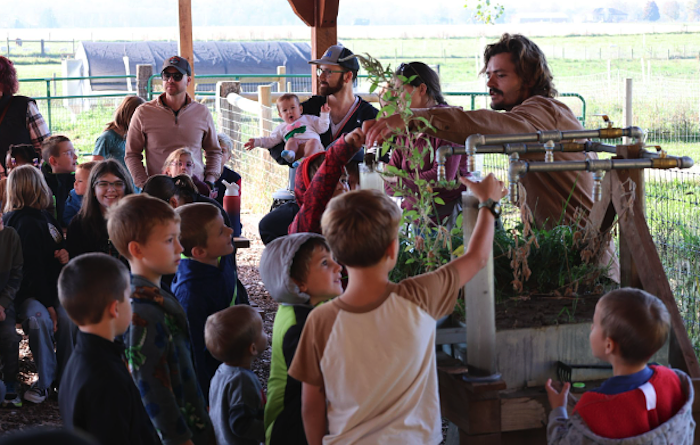
(Above: My brother Bruce leading a soil health demonstration at our farm for a large group of young students)
When visitors to our farm see, feel, and smell the dramatic difference between conventional and regenerative soils, it’s amazing to watch the light bulbs go off. In these moments, customers tell me they plan to be lifetime customers.
Our 30-Year Mission
We’re on a 30-year mission to build a food system based on transparency, one that links the entire supply chain back to farmers and the health of their soil. And we want to do it on a scale that’s impossible to ignore.
I truly believe that with your help, Seven Sons can be the lighthouse that leads and inspires American farmers to make the transition to regenerative practices.
I don’t put much hope in corporations or governments to drive real change. But I believe the American farmer will ultimately do the right thing. They just need an example.
And that’s what we aim to be.
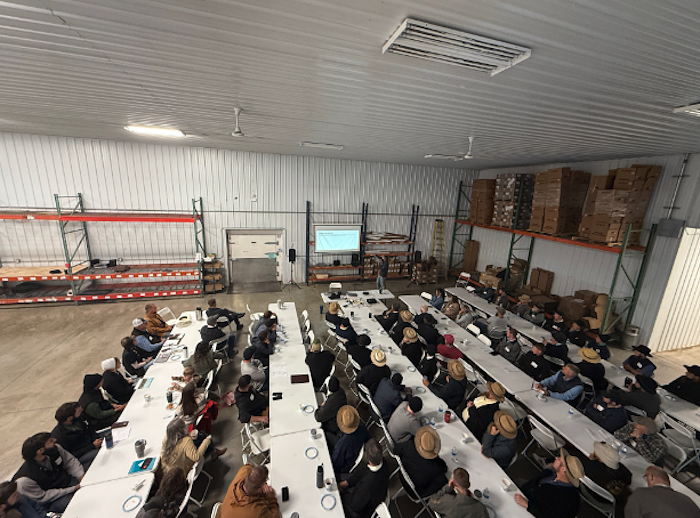
(Above: Over 100 of our friends and partnering farmers gathered at Seven Sons in Roanoke, IN, learning about regenerative agriculture.)
All it takes is reaching a tipping point. I believe that within 30 years, regenerative practices can become the standard on 80% or more of U.S. farms, and who knows, maybe the world.
A big part of my confidence comes from the fact that the economic and ecological benefits will simply be impossible to ignore.
Thank you again for being on this journey with us. The future is bright. 😎